
Seollal, or Korean Lunar New Year, marks the beginning of the new year according to the lunar calendar and is officially observed as a three-day national holiday. However, many people take additional days off to extend the break. The date changes each year, typically falling between late January and mid-February. In 2026, Seollal took place on the 17th, with the official holiday took place from Monday, February 16th to Wednesday, February 18th. Along with Chuseok, it is one of the country’s largest annual consumer spending events, characterized by family visits, massive purchasing of holiday gifts, and travel.
Read our Korea’s MZ Generation report
Seollal was traditionally a family gathering holiday, but the MZ Generation is now focusing more on comfort
Traditionally, Seollal is a time when families gather, often traveling long distances to their hometowns. During the holiday, highway toll gates are free, encouraging people to drive and visit their family members. Families perform ancestral rites, share traditional foods such as tteokguk (rice cake soup) and jeon (Korean pancakes), and exchange New Year greetings and blessings, including giving New Year’s gift money. The holiday represents respect for elders, family unity, and renewal, making it both a deeply traditional and socially significant occasion in Korean society.
These days, however, Seollal is transforming into a shorter and more flexible holiday, influenced by the MZ Generation. Younger Koreans are simplifying traditions, using digital tools for greetings and rituals, and placing greater emphasis on self-care and experience-based celebrations. While family remains the core value, the holiday is expanding to include friends, romantic partners, and colleagues. People are performing fewer ancestral rites and making less jeon, which is very labor-intensive. Instead, they are buying premade food to share with family. Some people are not visiting their families at all, choosing instead to send money and gifts online, travel, or stay at home.

Restaurants are open during Seollal now
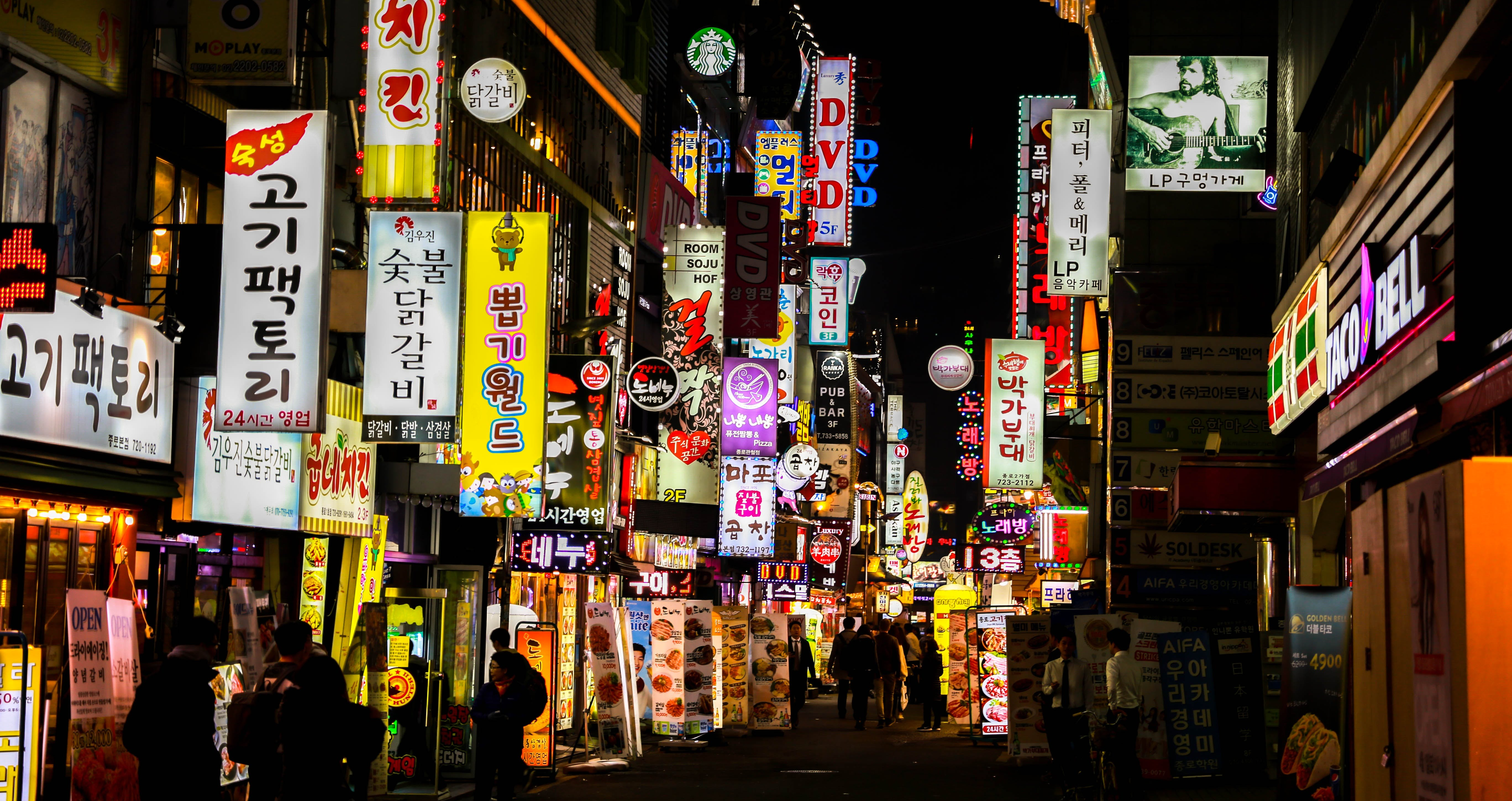
Traditionally, most small and family-run restaurants closed during Seollal, reflecting the focus on home-based family gatherings. In recent years, however, more restaurants, especially chains and Korean BBQ outlets in tourist districts such as Myeongdong, Hongdae, and Gangnam, remain open during the holiday. While many small businesses still close on the first day of Seollal, reopening on later days has become more common. This change is closely linked to MZ Generation consumers who stay in urban areas and prefer casual dining and rest over home cooking, making eating out a more normalized part of the Seollal experience.
The Korean government is expanding its role during Seollal
The Korean government is playing a highly active role during Seollal in stabilizing the economy and protecting everyday livelihoods. For Seollal 2026, it implemented large-scale measures focused on price stabilization, financial relief, and domestic demand recovery. These include record-level supplies of holiday staple goods with government-backed discounts, substantial financial support for small businesses, SMEs, and low-income households, and early payments of welfare benefits to ease household burdens ahead of the holiday. At the same time, the government supports local economies through regional gift certificates, domestic travel incentives, and transportation discounts, while also ensuring public safety with 24-hour emergency and medical response systems.
Additionally, while traditional markets are generally cheaper than large supermarkets, government-backed discounts provided further savings. According to the Korea Agro-Fisheries & Food Trade Corporation (aT), based on a survey of 24 items required to prepare a charye table for a family of four, conducted across 17 traditional markets and 36 large retailers in 23 regions nationwide, the cost for preparing a four-member household’s charyesang decreased from KRW 188,239 in 2025 to KRW 185,313 in 2026.
The new Seollal gift trend is changing from practical to curated
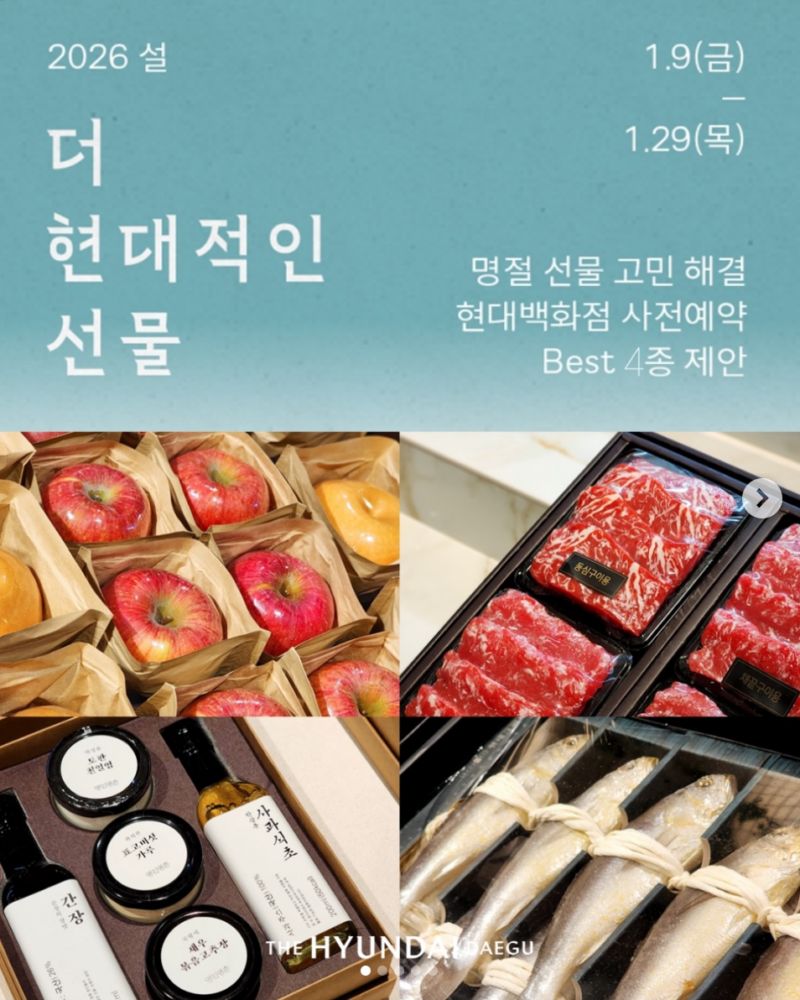
Seollal gift culture is shifting from bulk, practical items toward thoughtfully curated gifts that blend traditional aesthetics with modern lifestyles. While Seollal gifting dates back to the Joseon Dynasty as a way to wish prosperity and ward off misfortune, today’s consumers place greater value on design, symbolism, and personal meaning. Premium hotels and local brands now offer refined gift sets featuring hanwoo beef, seafood, traditional sweets, skincare, and lifestyle goods, often wrapped in bojagi or hanji and designed in smaller, more customized formats. This trend reflects changing household structures and consumer preferences, where tradition remains important but is expressed through modern, design-driven, and experience-focused gifts.

Department stores and supermarkets offer up to 50% discount
During Seollal, major retailers play a central role in shaping Korean consumer behavior, as holiday spending becomes highly planned and strongly price-sensitive. Faced with inflation and rising gift costs, Korean consumers are actively seeking large-scale discounts, promotions, and bundled benefits, making Seollal one of the most promotion-driven retail periods of the year.
For example, Hyundai Home Shopping offers discounts of up to 40% across more than 1,600 gift items through TV and online channels in 2026, while Hyundai Department Store highlights the continued importance of premium gifting, expanding its 2026 Seollal lineup to over 1,300 curated sets, including record volumes of hanwoo beef, diversified small-package options for smaller households, upgraded dessert-fruit assortments, and eco-friendly packaging. Strong demand for Korean beef, fruit, seafood, health foods, and alcoholic beverages reflects the enduring role of gifting, while the heavy use of promotions and digital channels shows that Korean consumers are increasingly strategic, value-conscious, and efficiency-oriented in how they prepare for Seollal.
Alcohol gift sets are abecoming a popular Seollal gift option
Alcohol and drinking-related promotions have also become a visible part of Seollal consumption patterns, reflecting the continued importance of gifting within drinking culture in South Korea. During the holiday season, premium and traditional alcoholic beverages are positioned as symbolic yet practical gifts, supported by limited editions and holiday discounts.
For example, Diageo Korea launched Lunar New Year exclusive whisky gift sets featuring Johnnie Walker and single malts such as Talisker, Lagavulin, and Oban, offered across department stores, hypermarkets, convenience stores, and digital gifting platforms like KakaoTalk Gift. These sets emphasize variety, personalization, and different consumption occasions from family gatherings to casual highballs, highlighting consumers’ growing preference for choice and experience.
At the same time, local producers such as Jipyeong Brewery introduced premium soju gift sets that combine traditional craftsmanship with refined packaging, catering to consumers seeking meaningful yet accessible Seollal gifts. Together, these promotions show that while Seollal gifting remains deeply rooted in tradition, Korean consumers increasingly favor curated alcohol gifts that balance symbolism, quality, and value, reinforcing alcohol’s enduring role in holiday exchanges and social bonding.
Seollal is increasingly becoming a domestic travel and rest-focused holiday among office workers
According to “Elimnet Now and Survey” of 900 Korean office workers aged 20 and above from January 16th to 21st in 2025, when asked if they had travel plans, 47.4% said they planned domestic travel, 13.9% planned to travel abroad, and 38.7% reported having no travel plans. This highlights the growing role of domestic travel alongside the continued importance of family-centered activities during the Seollal period.
Koreans are looking for rest and healing during their trip
Among respondents planning to travel, family was the dominant travel companion (74.3%, 410 people), followed by friends or partners (16.7%), solo travel (7.8%), and group travel (1.3%). The primary purpose of travel was rest and healing (45.8%), with nature and urban tourism (31.0%) ranking second.
Koreans with no travel plans still spend most of their time together with their family
For office workers with no travel plans, family gatherings were the most common activity (72.7%), followed by organizing household chores (28.2%) and watching movies or dramas (27.3%). Socializing with friends or spending quiet time alone each exceeded 20%, whereas activities such as reading, exercise, self-development, and cultural experiences remained relatively minor.
Seollal remains a meaningful holiday, evolving with modern Korean lifestyles
- Seollal shopping in South Korea is one of the largest consumer spending periods, with households buying gifts, ancestral ritual foods, dining out, and planning domestic travel.
- Consumers are increasingly strategic and value-conscious, seeking discounts, bundles, and smaller curated sets while balancing cost with tradition.
- Gift culture is evolving from bulk to premium and personalized selections, including hanwoo beef, seafood, traditional sweets, skincare, lifestyle goods, and alcohol.
- Retailers adapt to changing shopping behaviors, offering discounts, limited editions, and convenient online purchasing through department stores, home shopping, and digital platforms.
- Seollal shopping in South Korea now extends beyond gifts, encompassing domestic travel, dining out, and rest-focused experiences, particularly among MZ Generation consumers.
- Government policies influence consumer behavior, with price stabilization, financial relief, and holiday incentives supporting spending and domestic demand.