

As China’s perfume market matures, the key narrative is no longer merely the pace of category expansion, but rather the shift in how Chinese consumers understand, select, and experience perfumes. In China, fragrance is gradually moving beyond its traditional role as a symbolic luxury item to become an integral part of daily life. It became closely intertwined with emotions, self-expression, and lifestyle. This transformation is influencing fragrance consumer trends in China, including scent preferences, concentration levels, product formats, and purchasing channels.
Download the 2026 China Beauty Report here
From the popularity of light, fresh scents like florals and fruit notes to the rise of emotionally driven narratives and brands rooted in Eastern aesthetics, today’s perfume consumer trends in China demonstrate increasingly nuanced and segmented demands. Understanding these shifts is crucial; in the current Chinese perfume market, emotional resonance and everyday practicality are just as important as the perfume itself.
Consumer preferences when they choose perfumes
Perfumes can be broadly categorized into four types based on fragrance concentration (from highest to lowest) and wear time (from longest to shortest): Parfum, Eau de Parfum, Eau de Toilette, and Eau de Cologne. Data show that when choosing a perfume type, 63.1% of consumers opt for Eau de Toilette (EDT), while 48.6% prefer Eau de Parfum (EDP). The main reason for EDT’s popularity is that it aligns with most consumers’ daily perfume-use habits. Its light and versatile nature makes it suitable for commuting, the office, dates, and various social occasions, reflecting a low-key lifestyle. Perfumes with overly intense scents, on the other hand, can easily overwhelm the senses and provoke aversion.
Consumer preferences and market share for different scents
The gender and age distribution of consumers directly influences current consumer behavior regarding specific fragrance scents. According to publicly available data, the Chinese perfume market remains dominated by women, who account for approximately 60% of the market. The male market share surpassed 40% for the first time in 2024. In terms of consumer preferences, floral and fruity scents consistently rank as the top two fragrance families, accounting for 37% and 36%, respectively. When combined with the perfume types discussed earlier, it becomes evident that fresh, light, and sweet scents paired with light-intensity perfumes form the most compatible combination. The natural beauty of floral scents effortlessly evokes associations with refinement, softness, and the freshness and natural elegance of blooming flowers. Because it is often linked to feminine charm, it resonates particularly well with China’s female-dominated perfume market.
Floral, fruity, and woody: A market in transition
In terms of actual market share, floral scents remain firmly in the mainstream at 26%, but with a growth rate of only 6%, they represent a mature and stable core segment. Fruity scents (8% market share) and floral-fruity scents (7% market share) both recorded 26% growth, making them the most dynamic fragrance families in the current market. In contrast, woody scents and oriental scents saw growth rates of -10% and -19%, respectively, indicating that market acceptance of traditional, heavy-bodied scents continues to decline. A stark contrast to the trend toward light, sweet, and fresh scents. This also suggests that while floral fragrances remain the most widely accepted fragrance type in China, this broad popularity has not fully translated into concentrated purchasing patterns. In fact, more niche and trend-driven fragrance types, such as fruity, floral-fruity, and woody-floral scents, are driving greater segmentation in consumer demand.


Value-driven consumption that emphasizes emotional connection
One issue that arises alongside the massive share of online perfume sales is this: when consumers cannot experience the scent in person, what exactly guides their choices?
A report provides a clear answer: China’s fragrance market has fully shifted toward value-driven consumption centered on emotional connections. More than 40% of consumers choose perfumes based on specific emotions or occasions, and this emphasis on emotional value is driving the transformation of perfume from a discretionary luxury item into an everyday necessity. A prime global example is the brand PHLUR. Acquired in 2021 by Chriselle Lim, an influential social media personality with 2.8 million followers on TikTok’s international platform, the brand launched the “Missing Person” fragrance in 2022. The entrepreneur explained that she designed the product during a low point in her life following her divorce, infusing it with her longing and nostalgia for a lost relationship. This approach significantly amplified consumer resonance.
When scent meets sentiment: Viral emotions drive sales
A viral comment described it as “smelling like the people you love and miss,” prompting many other creators to share emotional reviews and generating strong, organic demand for the product. Currently, “Missing Person” remains the brand’s flagship global fragrance. This drives PHLUR toward its projected USD 175 million in annual retail sales by 2026. This clearly demonstrates that in today’s online landscape, the path to perfume sales has shifted significantly: consumers first encounter content, form an impression of the product, decide to purchase, and only then experience the actual scent.

Brands like PHLUR demonstrate how emotional narratives drive perfume consumption, a trend that is becoming increasingly evident in China. Chinese consumers are paying greater attention to the emotional significance of perfumes, including how a particular scent aligns with specific moods, occasions, or self-image. Data shows that treating oneself and enhancing one’s emotional experience are the primary reasons Chinese consumers purchase perfume. The latter half of this article will explore in detail how Chinese perfume brands are increasingly relying on unique Eastern narratives, atmospheres, and emotional resonance in their strategies.
New market practices for navigating current sales paths
Amid these structural shifts, the online perfume market has increasingly become an expectation economy. Brands must manage the imagination and anticipation consumers form before actually smelling the product—specifically, the expectation of “what this perfume might smell like.” Given this context, two distinct market practices have emerged. The first is experience management, ranging from sending scent cards and including samples with orders to hosting short-term pop-up scent-testing events and offering perfume subscription services, all designed to let consumers experience the product before making a decision. Overseas markets saw these systematic efforts emerge earlier. The most typical subscription platforms, such as Scentbird and Scentbox, offer 8ml sample vials of hundreds of mainstream and niche perfumes, curated monthly based on users’ interests. This helps them truly experience the scents in everyday contexts, rather than relying on abstract descriptions to guess what they smell like.
Another market approach follows an e-commerce model, treating samples as standalone products. On JD.com, numerous commercial and niche perfume brands, including Gucci, Maison Margiela, and Penhaligon’s, have launched their own sample gift sets. Local Chinese brands like Documents also offer a range of purchase options for their fragrances, from 5ml to 15ml. Additionally, many individual sellers offer single samples of luxury perfumes. Data from the Tmall platform also reflects the potential of this segment in the Chinese market: the 83.4% growth rate for perfume sets and the 26.2% growth rate for scent-testing gift sets and tools are significantly higher than the 16.2% growth rate of the perfume category itself. It is worth noting, however, that the market size for scent-testing gift sets is only RMB 56 million. Nevertheless, this still indicates that they have the potential to become a new growth driver.
Case study: To Summer’s narrative of Eastern aesthetics
In addition to restructuring sales channels, another group of brands has opted for a more fundamental approach to brand-building: transforming their brands into extensions of a cultural lifestyle. One of the most common content strategies in the Chinese perfume market is the contemporary expression of Eastern cultural narratives.
Take the Chinese perfume brand To Summer, for example. It constructs an Eastern aesthetic narrative through three layers. First is olfactory localization. It no longer limits itself to standard, superficial Chinese symbols like plum blossoms, orchids, bamboo, and chrysanthemums, but instead incorporates local ingredients such as osmanthus, mugwort, jasmine, and Pu’er tea, scented materials that carry shared memories for Chinese consumers. These shared olfactory memories, deeply rooted in the emotions of the Chinese people, can evoke widespread emotional resonance.
Crafting an Eastern aesthetic through storytelling
The second layer involves narrative-driven naming and literary imagery. To Summer strives to create a poetic world of fragrance. The product team first identifies a cultural image or emotional memory that resonates with Eastern audiences, then uses this as the foundation for fragrance creation, naming, and visual design, ensuring each product has its own complete, unique story. Product names deeply intertwine scents with regional memories, the passage of the seasons, and classical poetry and allusions. Take the product “Cedarwood” (昆仑煮雪) as an example: the product description not only describes the scent but also recounts the geography of the Kunlun Mountains and the refined pastime of ancient people boiling snow to brew tea. Paired with imagery of snow-capped mountains and tea stoves, it creates a complete Eastern aesthetic, reminiscent of a Chinese landscape painting.

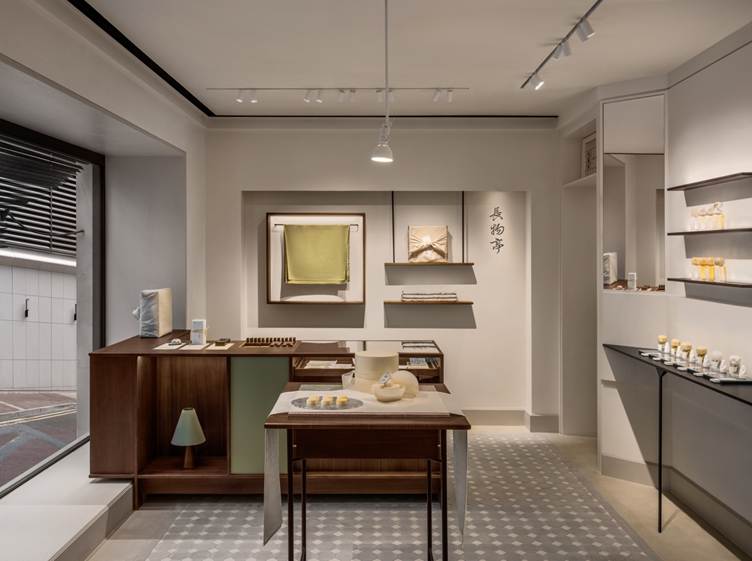
The third layer involves spatial and lifestyle curation. In September 2025, To Summer opened its first overseas store in Hong Kong’s Causeway Bay. Rather than simply replicating the format of its previous stores, the brand delved deeply into Hong Kong’s local culture, centering the spatial concept around “Made in Hong Kong” while celebrating the creative spirit of women during the city’s manufacturing boom of the 1960s. The store comprises four distinct zones: “Eastern Ingredients Studio,” “Changwu Pavilion,” “Study Room,” and “Bathroom.” To summer transforms “Longwu” (which the ancients regarded as an external entity) into a customizable gifting space, creating a complete gifting ritual: tea tasting, presenting chapters, selecting floral-patterned stationery, affixing stamps, wrapping book covers, and finally wrapping the entire gift box in fabric. To summer, perfume presents a sensory and philosophical experience, selling cultural ambiance and aesthetic value.
Oriental scent and oriental aesthetics are not the same
It is important to note that while market data indicates the weakest growth in oriental fragrances, this does not necessarily mean that oriental-style perfume brands are losing influence in China. These two are not the same concept. Oriental fragrances are typically characterized by rich, heavy notes with resinous and spicy accents, which do not align well with current consumer demand for light, fresh, and versatile perfumes.
As a local brand, To Summer does not focus on oriental fragrances per se but rather on building a broader system of oriental aesthetics that encompasses cultural memories, store design, local materials, and region-based storytelling. While its previously acclaimed Cedarwood perfume is also an oriental woody scent, it was launched in 2021 and therefore cannot serve as a valid indicator of current consumer fragrance preferences. To Summer recently launched “Watery” fragrance, released in 2025, which features aquatic, fresh, floral, and musky notes rather than the typical rich oriental scent.
5 key takeaways from perfume consumer trends in China
- Emotional value, self-expression, and lifestyle fit are becoming central to buying decisions for Chinese perfume consumers.
- Light and versatile products are winning in China: EDT is the most preferred concentration, while floral and fruity scents remain the most popular because they align with everyday use, social settings, and a low-pressure style of self-presentation.
- Floral remains the mainstream scent family, but the fastest growth is coming from fruity and floral-fruity fragrances, suggesting that Chinese consumer demand is becoming more segmented and trend-sensitive rather than concentrated in one dominant scent type.
- Online fragrance consumption is increasingly driven by emotion and imagination: many consumers now purchase based on storytelling, mood, and anticipated experience before smelling the product itself, making samples, discovery sets, and scent-testing tools more important.
- The slowdown of traditional oriental scent profiles does not mean Eastern-inspired brands are losing relevance. Brands such as To Summer are succeeding by translating Eastern aesthetics into cultural storytelling, local ingredients, and lifestyle experiences, while offering more modern and wearable scent expressions.